Audiologist vs. Hearing Aid Dispenser — Understanding the Difference
When you start looking into hearing care, you may come across two types of providers — audiologists and hearing aid dispensers. Both can fit and sell hearing aids, but there are meaningful differences in education, training, and scope of practice that are worth understanding before you choose where to go for your hearing health.
Education and Credentials
An audiologist holds a doctoral degree — either an Au.D. (Doctor of Audiology) or a Ph.D. — which requires a minimum of four years of graduate-level education beyond a bachelor's degree. That training covers the full scope of audiology, including anatomy and physiology of the auditory system, diagnostics, hearing loss across all age groups, tinnitus, balance disorders, and hearing device technology.
To become a licensed audiologist in Connecticut, a practitioner must also complete a supervised clinical fellowship year following their doctorate before they can practice independently.
A hearing aid dispenser, sometimes called a hearing instrument specialist or hearing aid specialist, completes a shorter training program focused primarily on fitting and selling hearing aids. In Connecticut, dispensers must pass a state licensing exam, but the educational requirements are significantly less extensive than those for an audiologist.
Scope of Practice
The difference in training translates directly into scope of practice. Audiologists are qualified to diagnose hearing loss and other auditory disorders, conduct comprehensive evaluations, and treat conditions ranging from age-related hearing loss to tinnitus and auditory processing difficulties.
A hearing aid dispenser's scope is limited to the fitting and dispensing of hearing aids. They are not licensed to diagnose hearing loss or other auditory conditions. If a dispenser identifies something outside their scope during an appointment, they are required to refer the patient to a physician or audiologist.
This distinction matters because a thorough hearing evaluation involves more than identifying that someone has hearing loss. Understanding the type, degree, and configuration of hearing loss — and ruling out underlying medical causes — requires the clinical training that audiologists receive.
Why Credentials Matter for Hearing Aid Fittings
Even when the goal is simply to get a well-fitted hearing aid, an audiologist's broader training plays a meaningful role in the outcome. A complete audiological evaluation helps identify the specific nature of your hearing loss, which informs not just which devices may be appropriate, but how they should be programmed.
Over-the-counter hearing aids have made amplification more accessible, and for some people with mild, uncomplicated hearing loss, they may provide some benefit. That said, OTC devices use pre-set programming and cannot be customized to your individual hearing profile. For most people with hearing loss — particularly those with moderate or greater loss, asymmetric loss, or tinnitus — working with an audiologist for a properly fitted prescription device tends to produce a more consistent and effective result. The fitting process, follow-up care, and adjustments over time all contribute to how well someone does with their hearing aids long-term.
What to Look for in a Hearing Care Provider in Connecticut
In Connecticut, both audiologists and hearing aid dispensers must hold a valid state license. You can verify credentials through the Connecticut Department of Public Health. When seeking care, it helps to confirm whether your provider holds an Au.D. or Ph.D. and whether they are a member of a professional organization such as the American Academy of Audiology or the Academy of Doctors of Audiology.
The practice setting also matters. Hearing care offered through an ENT or general medical practice may be overseen by a physician rather than a dedicated audiologist, meaning hearing aids may be one of many services handled rather than a primary focus.
An audiologist-owned practice dedicated exclusively to hearing health means your care comes from someone whose entire professional focus is on audiology — not as a secondary service within a larger medical clinic.
Schedule a Hearing Evaluation in Westport
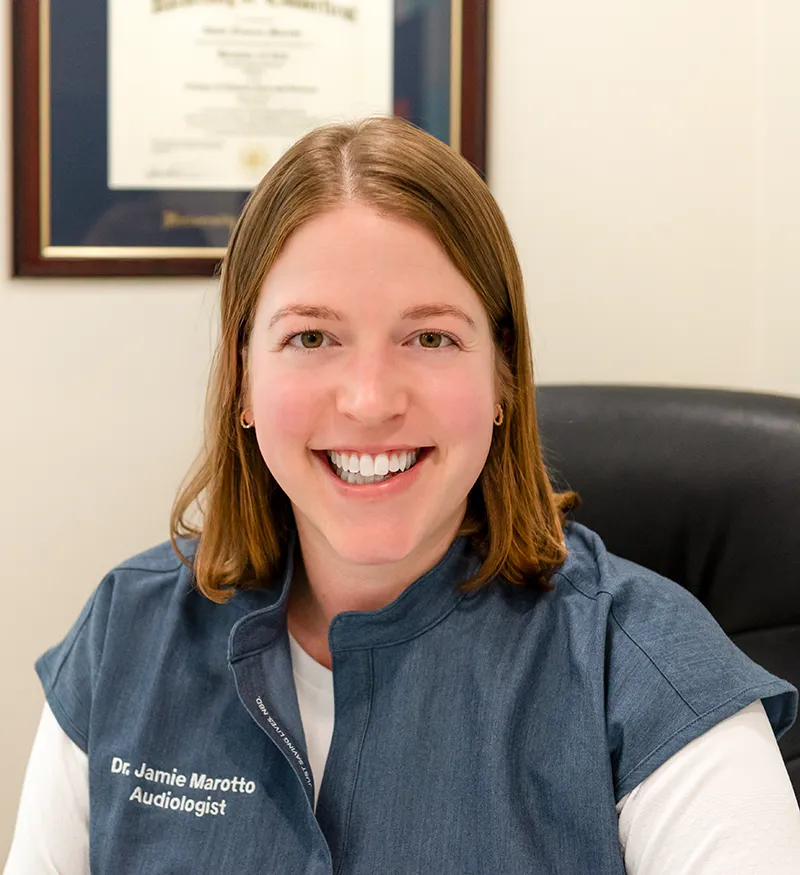
At Fairfield County Audiology, we are Westport's only audiologist-owned practice. Dr. Jamie Marotto holds her doctorate of audiology from Northwestern University and is a member of the American Academy of Audiology, the American Speech-Language Hearing Association, and the Academy of Doctors of Audiology. We focus exclusively on hearing health, and we take the time to understand your needs without rushing through your appointment.
If you have questions about your hearing or want to understand your options, we welcome you to schedule a consultation. Call us at (203) 628-2142 or visit fcaudiology.com to get in touch.